“Revenue Alone Tells You Nothing”: Michal Kaczor on the Deals Worth Keeping
KeyAffiliates' Head of Affiliates Michal Kaczor on negotiating with giants, managing conflict of interest, surviving regulatory shocks and the quiet habits that keep affiliate programmes profitable.
Interview with Michal Kaczor, Head of Affiliates at KeyAffiliates
 Irina Polovinkina
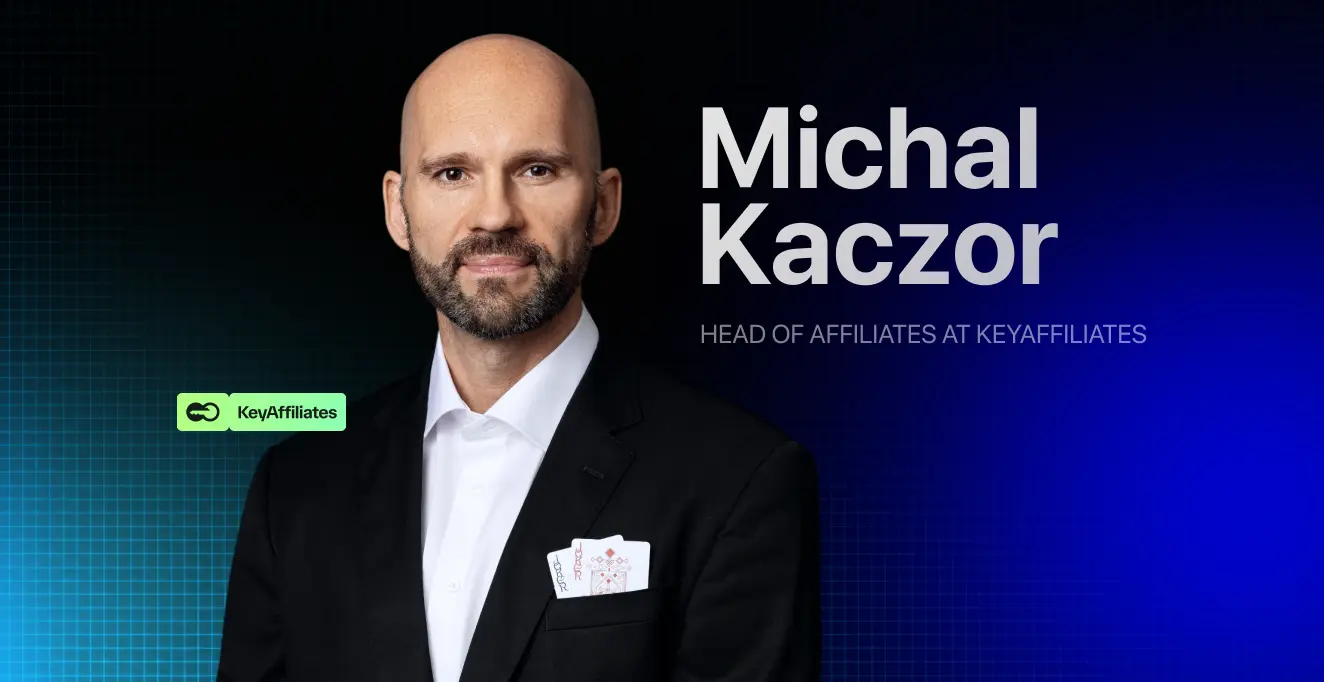
Two years, two sides of the table. Michal Kaczor arrived in affiliates in 2023 and now heads the department at KeyAffiliates, buying and selling traffic at once. He talks trust, tight margins, and why the biggest CPA is rarely the deal worth signing.
Clast: You progressed from Affiliate Manager to Head of Affiliates at a multi-brand operator. Looking back, what was the real turning point when you started to treat affiliate management as a commercial discipline rather than just relationship handling? What specifically changed in the way you made decisions once you had a team and a budget behind you?
Michal: Honestly, it all happened pretty fast. I started working in a casino in 2022 and got my first affiliate job at the start of 2023, so I had to learn quickly. The turning point was getting a team of up to 5 people and a budget, and having to report numbers every day.
You can’t run things on “he’s a good guy” anymore. Every deal has to make sense: what it costs, what quality it brings, and whether it’s worth the team’s time. That’s when affiliates stopped being just relationships for me and became a business.
Clast: How did you decide which partners to involve directly, which to delegate to, and which to deliberately deprioritise, even though they were generating revenue?
Michal: I keep the partners who drive the most volume, or who can really scale, close to me. Steady partners go to the team, with clear rules on what they can agree without me. The hardest part is stepping back from partners who still bring revenue. But if quality keeps dropping, or every month turns into a fight over rates, my time is better spent on someone who can grow.
Revenue on its own doesn’t tell you much. What it costs you to keep it does.
Clast: How do you approach negotiations with large affiliates who fully understand their own value? Beyond the headline rate, which non-financial terms such as exclusivity, co-marketing or data sharing do you use as real leverage? Which of these terms have actually secured deals for you?
Michal: For me it comes down to trust. Many people in this industry know me, and they know that if I say something, it happens. Payments on time, no surprises with KPIs, and if something goes wrong, they hear it from me first.
That reputation has closed more deals for me than any extra euro on the CPA.
Big affiliates always have offers on the table. What they’re really choosing is who they want to work with.
Clast: You’ve now moved from being an operator to working at KeyAffiliates, where you’re responsible for both buying and selling traffic. What can you see from this position that you couldn’t see as an operator, and how has this changed the way you evaluate partners and deals?
Michal: On the operator side I was working with pretty much unlimited budgets, so the question was always where to put more. Now I see the other side. A lot of operators work with limited budgets, and every FTD has to earn its place. I also see both ends of a deal: what publishers need to keep running and what operators actually get from the traffic. It’s changed how I look at deals. The highest rate isn’t always the best deal if the brand doesn’t convert. A fair rate on a brand with a smooth funnel usually works better for everyone.
Clast: Buying and selling traffic within the same business inevitably creates potential conflicts of interest. How can this tension be managed in practice, and how can you ensure that both operators and affiliates feel they are getting a fair deal?
Michal: Keep it fair and keep it open. We work only with direct operators, we keep a fair margin, and we don’t try to squeeze either side, because a deal that only works for one side won’t last. We check quality every day, and if something isn’t performing, we tell the operator before they have to ask. Publishers know what’s expected and get paid for quality. When both sides trust you, the conflict mostly takes care of itself.
Clast: Affiliate marketing is constantly being reshaped by regulation, with licensing requirements, advertising restrictions and compliance obligations being introduced. To what extent is your commercial strategy driven by regulatory considerations, and how do you safeguard a programme’s profitability when a key market suddenly tightens its rules?
Michal: A lot. Many markets are unpredictable these days. This year we’ve seen several GEOs close for brands, sometimes with just a few days’ notice. And look at Brazil right now: after all the work on the new licensing system, betting could become illegal again, and operators who went through the whole licensing process are waiting for the Supreme Court to decide their future.
We also saw many casinos and programs close overnight. Some just went quiet, and affiliates were left chasing their commissions. Things can change in a matter of days, so you have to be prepared.
You can’t rely on one market or one brand. You always need options in backup, other markets, brands and sources, so traffic can move instead of stopping.
And you need to know who you’re working with, so your partners still get paid for the players they’ve already sent.
Clast: From the affiliate’s perspective, what distinguishes a genuinely easy and profitable operator from one that quietly drains partner motivation? Where do you think most operators lose money on affiliates without realising it?
Michal: For me an easy operator is simple to work with: quick replies, clear answers, payments on time and tracking that works.
Don’t overcomplicate things. Negotiating is normal and I’m happy to do it, but only to a point.
If an operator keeps pushing our rates below the market standard, the partnership stops making sense, and the traffic ends up somewhere else anyway. What really kills motivation is the quiet stuff: KPIs that change, commission lost to short qualification windows and conversion problems nobody fixes.
Affiliates rarely make noise about it. They just move their traffic somewhere else.
Clast: Which tactic in affiliate management is the most overrated right now? Conversely, which underrated approach do you think more operators and affiliates should be investing in?
Michal: Overrated: chasing the biggest CPA or the biggest numbers. It looks great on paper, but if the quality isn’t there, both sides lose, and the trust goes as soon as the chargebacks start.
Underrated: boring, everyday quality checks. Look at your partners every day, give new traffic a fair chance before you judge it, and react early when something’s off. Nobody posts about it on LinkedIn, but it saves a lot of money and a lot of awkward conversations.
Clast: Looking back, what belief did you have about this industry that you now realise was wrong, and what made you change your mind?
Michal: From where I started to where I am now, two things changed.
First, I thought relationships were enough. They open the door, but without data and results they don’t keep it open.
Second, I used to see operators and affiliates as opposite sides. Now that I work with both every day, I see they want the same thing: quality players and a partner they can rely on.
Clast: What are your plans for the future at KeyAffiliates, and what kind of partners and operators are you currently looking to connect with?
Michal: At KeyAffiliates we connect quality traffic with casino and sportsbook brands. Right now it’s mainly SMS and email across Tier 1 and Tier 2 GEOs, and we’re adding new sources like FB, in-app, influencers, SEO and PPC.
We’re looking for direct operators with brands that accept these sources and want long-term volume, and for publishers with their own traffic who want a team that knows the market. We’ve just launched a Telegram channel for operators, with one for publishers coming soon.