The Product Comes First: Glenn Debattista on Building in iGaming
A successful business requires more than a quick launch or an appealing offer; it must understand the market it is entering, solve a genuine problem and be able to adapt to changes in customer behaviour and industry conditions.
Interview with Glenn Debattista, CCO at BETSTARTERS
 Marie F
New markets open, technologies evolve, and operators are under constant pressure to launch products, expand their reach, and stay ahead of the competition. But speed, technology, and marketing alone do not guarantee long-term success.
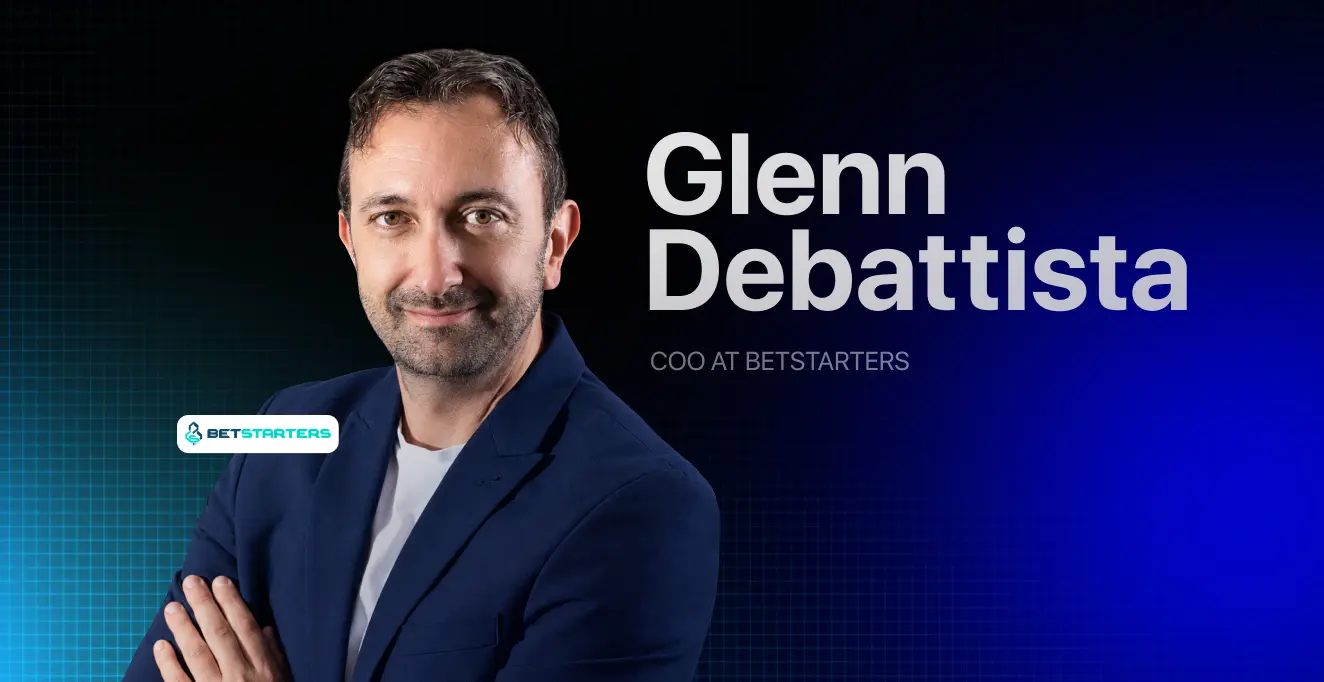
For Glenn Debattista, BetStarters’ Chief Operating Officer, the starting point is always the product. A successful business requires more than a quick launch or an appealing offer; it must understand the market it is entering, solve a genuine problem and be able to adapt to changes in customer behaviour and industry conditions.
Glenn has more than 20 years’ experience working across different areas of the iGaming ecosystem with operators, affiliates, agencies and platform providers. In this interview, he shares his insights on product-market fit, localisation, market expansion, partnerships and the importance of knowing where not to invest.
Clast: You’ve spent more than 20 years working across different sides of iGaming. How has the industry fundamentally changed the way successful businesses are built?
Glenn: When I started, you could probably get away with having a good product, a decent marketing budget, and being early to a market. Today, there are so many layers—from technology and regulation to payments, localisation, acquisition, and retention—that successful businesses need to get the whole ecosystem right.
I also think we’ve moved away from building something once and expecting it to work for years. You need to adapt constantly because the market around you is changing incredibly quickly.
Clast: You’ve worked with operators, affiliates, agencies, and platform providers. What does each side of the ecosystem understand about the business that the others sometimes miss?
Glenn: Operators understand the day-to-day reality of running a business and, ultimately, the challenge of making the numbers work. Affiliates probably understand player acquisition and traffic better than anyone. Agencies understand positioning and how to communicate a product, while platform providers like BetStarters see the complexity involved in making everything work together.
Having worked across different sides of the ecosystem, you realise that everyone sees a different piece of the puzzle. The interesting part is being able to bring those perspectives together.
Clast: Speed to market has become a major competitive advantage. But can moving too fast actually put a new operator at a disadvantage?
Glenn: Definitely. There’s a big difference between launching quickly and launching before you’re ready. You can have the fastest launch in the world, but if your payments don’t work properly, your CRM isn’t ready, or your product isn’t right for the market, you’ve simply reached your problems faster.
Speed matters, but it shouldn’t come at the expense of getting the fundamentals right.
Clast: Emerging markets are attracting increasing attention from operators and suppliers. What separates companies that genuinely understand these markets from those simply looking for the next growth opportunity?
Glenn: The biggest difference is whether they’re willing to listen and adapt, rather than arrive with a model that worked somewhere else and expect the same results. We’ve seen this particularly in markets across Africa and Latin America, where payments, regulation, player behaviour, and even device and internet usage can be completely different.
You need local knowledge and, ideally, local partners who understand the market properly. Simply copying and pasting a European strategy into an emerging market rarely works.
Clast: Localisation is no longer just about language. Which local differences can make or break an iGaming business but are still frequently underestimated?
Glenn: People often think localisation is simply about translating words into the local language. I’m sorry if this comes as a shock, but that’s not the case.
Payments would probably be at the top of my list, because players need to be able to deposit and withdraw using methods they already know and trust. There are many other factors to consider: regulation, preferred sports and betting markets, devices, internet speeds, customer support, and even how people respond to promotions.
Proper localisation means understanding how people actually behave in a particular market, not simply translating your website.
Clast: White-label and turnkey solutions have become more sophisticated and customisable. What should operators be looking for beyond the technology itself when choosing a platform partner?
Glenn: Technology is obviously important, but you’re also choosing a company you may potentially depend on for years. I’d look at how responsive and flexible they are when your business changes, the quality of their integrations, and, importantly, whether they actually understand the markets you’re targeting.
A great demo doesn’t necessarily tell you what that relationship will look like six months after launch, when you have a problem that needs to be solved quickly. Ultimately, you need a business partner who understands your needs and shares your goals—not just a technical partner who leaves you on your own once you’ve signed up.
Clast: As competition increases, companies are under constant pressure to launch new products, enter new markets, and move faster. How do you decide where not to invest?
Glenn: That’s probably becoming just as important as deciding where to invest. There’s always another market, product, feature, or opportunity, but chasing everything usually means doing nothing particularly well.
I tend to ask some simple questions: Does it solve a real problem? Is there genuine demand? Does it fit with what we’re good at? And can it realistically generate enough value to justify the resources required?
Sometimes, saying no is one of the best business decisions you can make.
Clast: You describe yourself as a problem solver and connector of people and companies. What makes a business relationship genuinely valuable in iGaming beyond the immediate deal?
Glenn: For me, the best relationships are the ones where neither side is constantly thinking about what they can get out of the other. I’ve had relationships in this industry that didn’t lead to business opportunities at the time but resulted in opportunities several years later, sometimes in completely unexpected ways.
iGaming is actually quite a small world, so trust and reputation can travel a long way.
A good relationship can ultimately be worth much more than a single deal. And often, the best way to build those relationships is through networking.
Clast: After two decades in the industry, what is one thing companies consistently overcomplicate when trying to grow?
Glenn: Probably trying to do too much at once. More markets, more products, more features, and more acquisition channels don’t automatically mean more growth. Sometimes, the answer is simply to do what already works better: improve the product, understand your customers, and fix the areas where you’re losing them.
Growth doesn’t always need to come from adding something new. Sometimes, it comes from identifying and acting on the low-hanging fruit.
Clast: If you had to name one source of real competitive power in iGaming today, what would it be — and why?
Glenn: I’d probably say adaptability. Products can be copied, technology becomes available to everyone, and today’s exciting new market eventually becomes crowded. The companies that consistently perform well are usually the ones that can recognise when something is changing and adapt faster than everyone else.
In an industry that changes as quickly as iGaming, standing still is probably one of the biggest risks you can take.
THIS OR THAT
First mover or fast follower?
Fast follower. Being first is great, but sometimes letting somebody else make the expensive mistakes isn’t a bad strategy.
More markets or stronger presence in fewer markets?
Stronger presence in fewer markets.
Best product or best team?
Best team. The best team can build a better product. Having the best product with a poor team means you will eventually fall back and won’t have the best product anymore.
More choice or better focus?
Better focus helps you make better choices.
Experience or fresh thinking?
Experience, but with enough fresh thinking to challenge ideas.
Big brand or strong relationships?
Strong relationships. Especially in iGaming where networking is very important
Control or flexibility?
Flexibility as you need to adapt to the constant changes in iGaming.
Play it safe or take the bet?
Take the bet. I wouldn’t have lasted over 20 years in this industry otherwise!