Mihail Criclevit: Slower on Trust, Faster on Clarity
“Partnership” is one of the most frequently used words in business, and one of the easiest to misuse.
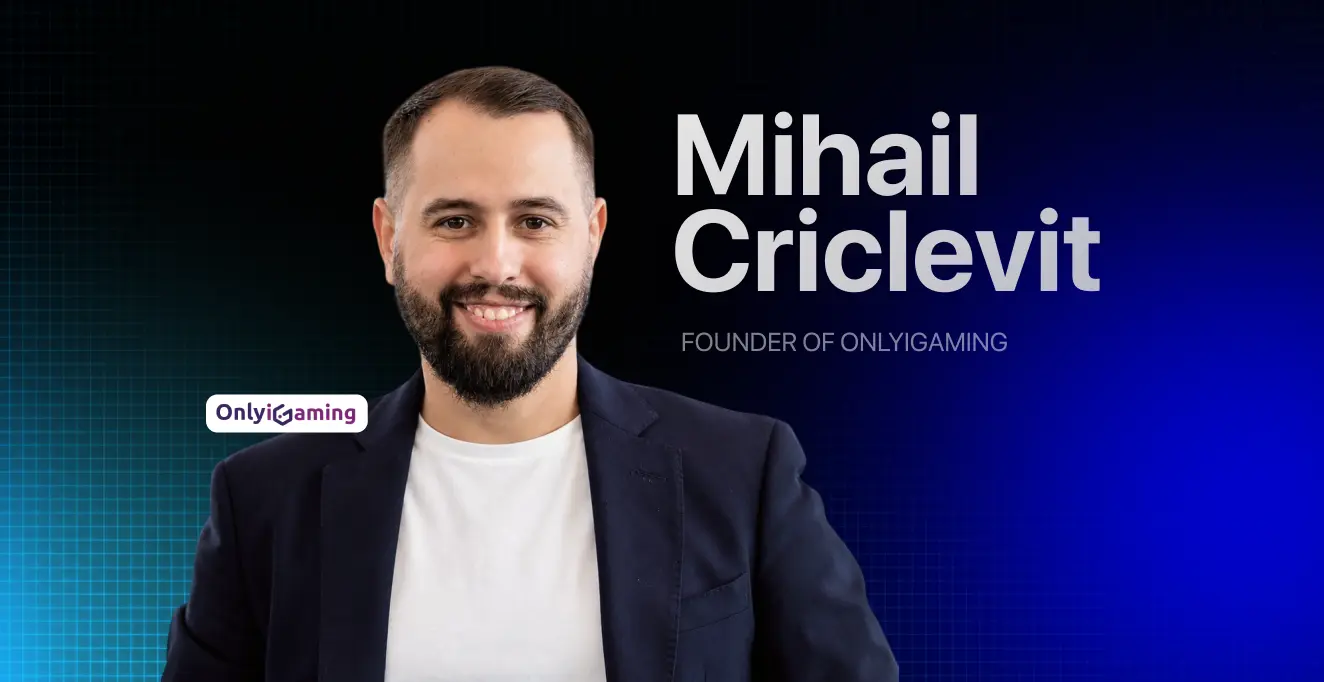
Interview with Mihail Criclevit, Founder of OnlyiGaming
 Marie F
“Partnership” is one of the most frequently used words in business—and one of the easiest to misuse.
In iGaming, companies work with operators, suppliers, affiliates, platforms, and technology providers every day. Many of these relationships are described as partnerships from the moment a contract is signed. But a commercial agreement does not automatically create one.
For Mihail Criclevit, Founder of OnlyiGaming, the difference between a transaction and a genuine partnership becomes clear when the relationship is put to the test. It is not simply about whether a company delivers what it promised, but how it behaves when performance drops, expectations change, or something goes wrong.
Every new partner can bring potential growth, access to new capabilities, or a route into a new market. But every relationship also creates dependencies, operational complexity, reputational exposure, and another set of priorities that need to be managed.
As Mihail puts it, “Most partnerships in this industry are recurring transactions wearing a nicer word.”
The difference between a transaction and a genuine partnership usually becomes clear long after the first contract is signed.
Align on Expectations Before You Align on Terms
Commercial negotiations often begin with terms.
Pricing. Revenue share. Volume commitments. Delivery timelines. All of these matter but they can also distract from a more important question: what does success actually mean for each side?
Two companies can enter into the same agreement while optimising for entirely different outcomes. One may be focused on short-term revenue, while the other is investing for long-term market access. One may prioritise growth, while the other is focused on margin. One may expect the relationship to create strategic opportunities, while the other sees it primarily as another distribution channel.
These differences do not always create problems immediately.
They usually become visible later, when performance needs to be evaluated or priorities begin to change.
Mihail’s approach is straightforward: “Align on expectations before you align on terms.”
That means defining success in practical terms. What are both sides trying to achieve? How will progress be measured? Who is responsible for what? And who has the authority to make decisions when circumstances change?
Clarity at the beginning does not eliminate disagreement later.
It does, however, ensure that both sides understand what they are disagreeing about.
“I’d rather have the awkward conversation in month one than the angry one in month six,” says Mihail.
For leadership teams, that can be the difference between a manageable disagreement and an expensive one.
A Good Partner Should Create Leverage, Not Management Overhead
The value of a partnership is not measured only by what it delivers.
It is also measured by how much organisational effort is required to maintain it.
A relationship may generate revenue and still consume a disproportionate amount of management attention. Constant escalations, additional reporting, repeated interventions, and senior-level involvement all create costs that are rarely visible in the original commercial model.
The strongest partners reduce uncertainty. They surface problems early, take responsibility for their side of the relationship, understand the agreed objectives, and do not require constant supervision. Rather than waiting for instructions, they identify opportunities and act on them.
“Average partners need managing,” Mihail says. “The best ones, I forget to worry about.”
One of the clearest ways to assess the strategic value of a partnership is to ask whether it creates leverage or consumes management bandwidth.
A strong partner makes execution more predictable, identifies risks before they escalate, and operates with enough alignment and accountability to avoid constant senior intervention.
The best partnerships reduce organisational friction while making those results easier to sustain.
Most Partnership Conflicts Are Alignment Failures Before They Become Relationship Failures
The most damaging conflicts between partners rarely begin with a single disagreement.
They develop when two organisations continue to make individually rational decisions that gradually pull the partnership in different directions.
One partner may optimise for short-term revenue while the other is investing for long-term growth. One may prioritise speed to market, while the other is focused on margin, risk, or operational stability. Neither side is necessarily wrong. The problem is that both can be succeeding against their own objectives while the partnership itself is becoming less effective.
“Most conflict isn’t bad faith,” Mihail says. “It’s two people optimising for different things with nobody saying so.”
That is why companies should not assume that the alignment reached during the initial negotiations will remain unchanged.
A partnership may begin with a common goal, but the businesses behind it continue to evolve. Markets shift, strategies change, leadership priorities move, and new commercial pressures emerge. What was important six months ago may no longer be relevant today.
Over time, partners may also develop different priorities. The critical question is whether the relationship has a mechanism for identifying those differences early enough to address them before they develop into conflict.
Regular project status meetings are rarely enough. Partners need direct discussions about what each side is optimising for, what has changed, and whether the original definition of success still applies.
The strongest partnerships do not avoid disagreements. They make them visible while there is still time to address them.
Trust Is an Operating Advantage
Trust is often treated as a cultural quality or a by-product of a good business relationship. In practice, it has a much more direct effect on how a partnership operates.
Trust determines how much information partners are willing to share, how quickly they can make decisions, and how they respond when circumstances change.
In low-trust relationships, information tends to move more slowly. Decisions require additional verification, commitments become more heavily protected, and problems are more likely to be discussed only after they have become difficult to ignore.
When partners trust each other, they are more willing to raise problems early, share uncomfortable information, and make decisions without assuming that every mistake will be used against them later. This matters most when conditions are uncertain and there is no obvious answer written into the contract.
Trust also changes how a partnership responds to failure. Without it, a missed target can quickly become a question of blame. With it, both sides have more reason to focus first on understanding what happened and deciding what needs to change.
For Mihail, however, trust has little to do with personal chemistry.
“I’m friendly with almost everyone and I trust very few,” he says. “Being friendly is easy. Trust is watching someone do the boring thing correctly when it costs them something, a few times over.”
That distinction is particularly important in an industry built around relationships.
Trust is not created by being easy to talk to, sharing the same social circle, or having good personal chemistry. It is built through evidence.
Does a partner deliver when no one is chasing them? Do they disclose a problem before the other side discovers it? Are they prepared to act in the long-term interest of the relationship when doing so creates a short-term cost for them?
These behaviours are what turn trust from a personal impression into an operational asset.
As Mihail puts it, “Being liked and being reliable are not the same, and I don’t mix them up.”
A Strategic Partnership Goes Beyond the Contract
Not every commercial relationship needs to become a strategic partnership.
A transactional relationship can be highly effective when the scope is clear and both sides receive exactly what they agreed to. There is nothing inherently weaker about that model.
A strategic partnership is different because the contract is no longer the only framework through which the relationship is evaluated.
Both sides begin to consider how their decisions affect the other business. Information is shared because it may help the partner make a better decision. Opportunities are introduced even when they sit outside the current scope. Problems are approached with an understanding of the wider commercial context rather than simply by asking which side is contractually responsible.
A strategic partnership creates enough long-term value for both sides to look beyond the immediate transaction. Not every useful contribution needs to be tied to a specific invoice or converted into an immediate commercial exchange.
“The best ones bring things with no invoice attached,” Mihail says.
That might mean introducing a useful contact, sharing market intelligence, identifying an opportunity, or raising an issue before it becomes the other company’s problem.
The important distinction is intent.
A transactional partner asks: “What are we required to deliver?”
A strategic partner also asks: “What would make this relationship more valuable for both businesses?”
That mindset can create opportunities that were never included in the original agreement. And over time, those opportunities may become more valuable than the transaction that brought the two companies together in the first place.
Slower on Trust, Faster on Clarity
Experience often changes the way leaders approach partnerships.
Earlier in a career, getting the deal done can feel like the main objective. The assumption is that once the contract is signed, the details will become clearer and the relationship will develop naturally.
In practice, that rarely happens on its own.
Mihail describes his approach today as being “slower on trust, faster on clarity.”
The two are often confused, but they develop very differently.
It is important to establish clarity early on. Before entering into a long-term business relationship, both parties need to understand what they are trying to achieve, how decisions will be made, where responsibilities begin and end, and what each party expects from the relationship.
Trust, however, develops more slowly. It is built through repeated interactions and evidence of how the other party behaves when there is something at stake. Small commitments establish a pattern, as does the willingness to openly address problems, even when doing so is inconvenient or commercially uncomfortable.
The objective is therefore not to slow down every commercial decision, but to avoid confusing the speed of agreement with the strength of the relationship. A partnership may be worth pursuing even before trust has been fully established. However, trust should not be assumed before the relationship has had time to prove itself.
This approach may result in fewer partnerships, but senior leaders should not aim to build the largest possible partner network. The objective should be to build relationships that create strategic leverage, reduce execution risk and continue to generate value as the business changes.
Ultimately, the success of a partnership is not defined by the promises made by two companies when the contract is signed, but by their ability to keep those promises when things get difficult.
Fewer partners. Choose harder.
This or That
- Trust or performance? Trust. Performance without trust is just a mercenary you’re renting.
- Gut feeling or data when choosing a partner? Data to build the shortlist, gut to make the call.
- One strong partner or ten smaller partners? One strong. Ten small is ten times the managing.
- Friendship first or business first? Business first. Friendship is a nice side effect, not the foundation.
- Same values or complementary skills? Both, but if you force me, same values.
- Big brand or proven track record? Track record. Logos don’t send traffic.
- Formal contract or handshake and trust? Contract. Then behave like you don’t need it.
- Direct communication or diplomatic communication? Direct. Diplomatic when it’s someone else’s people in the room.